Contribution
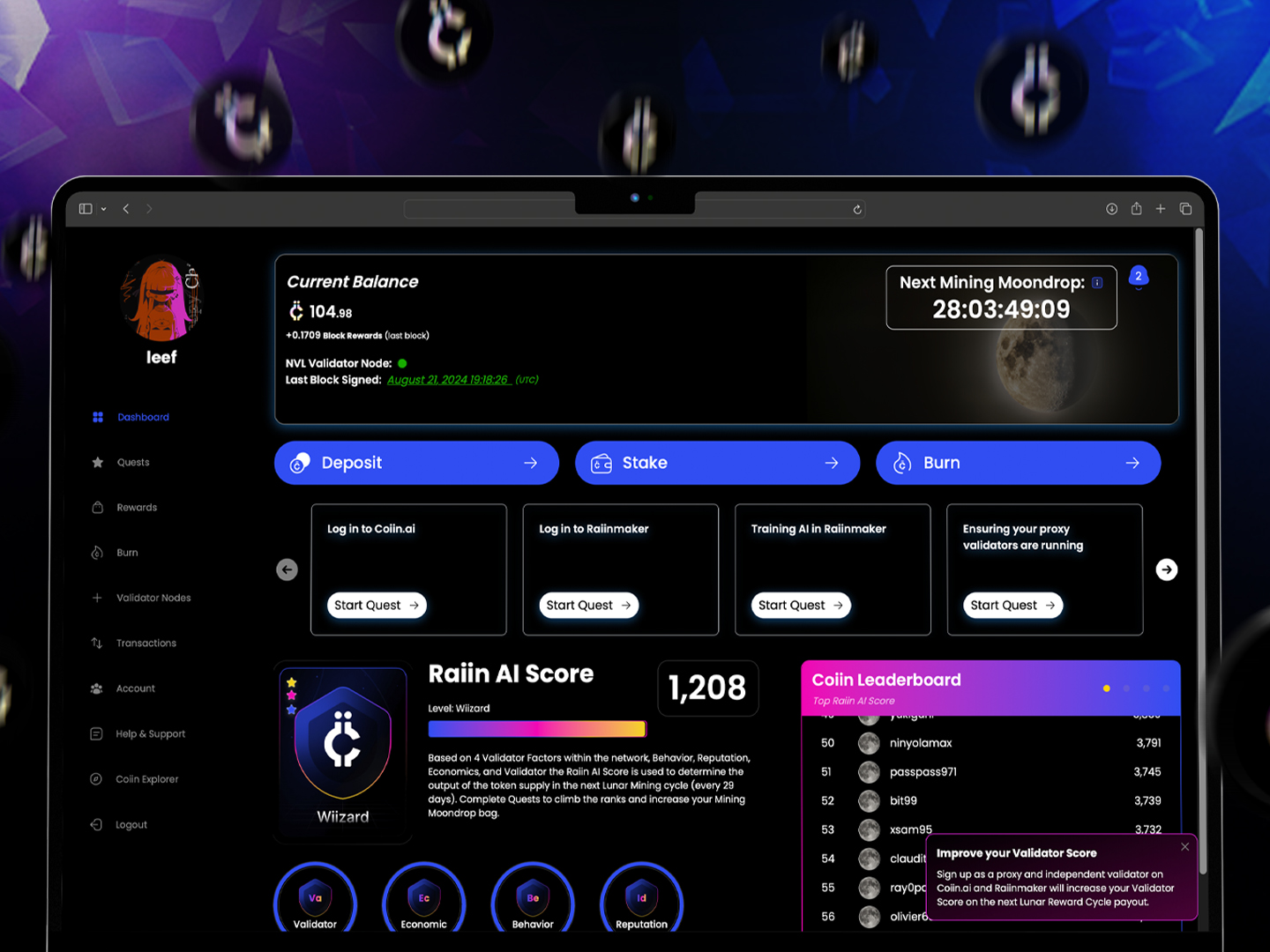
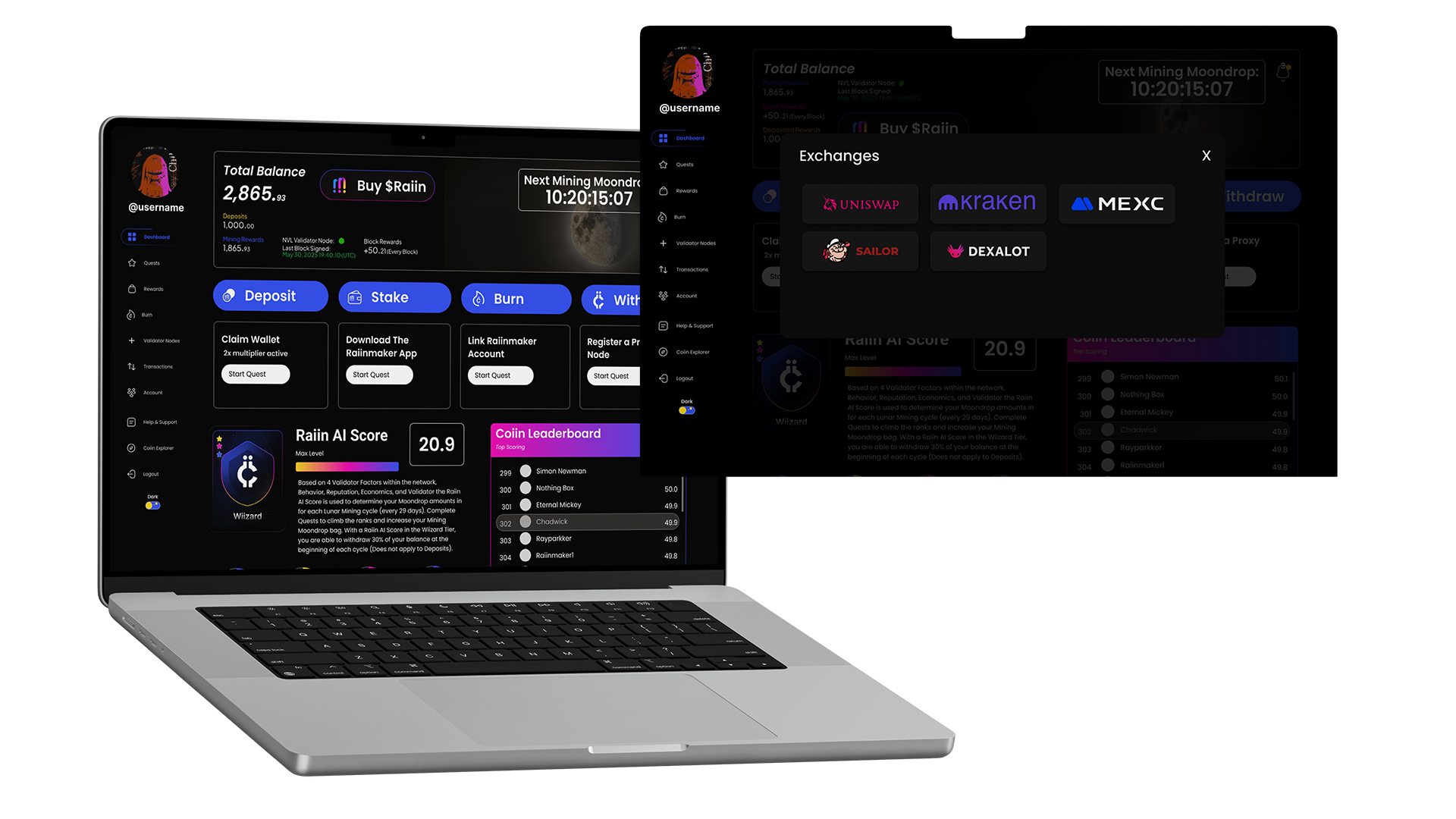
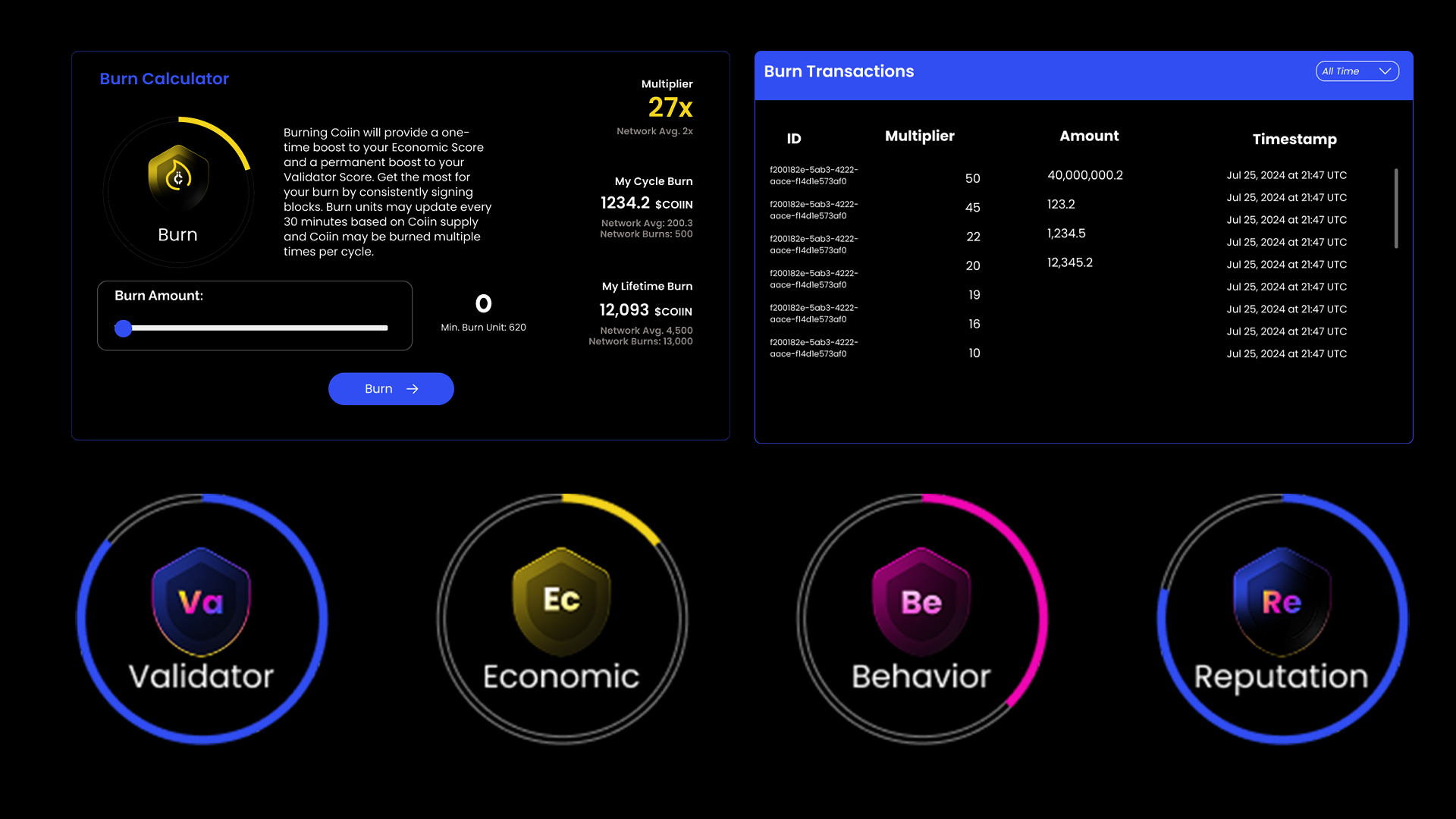
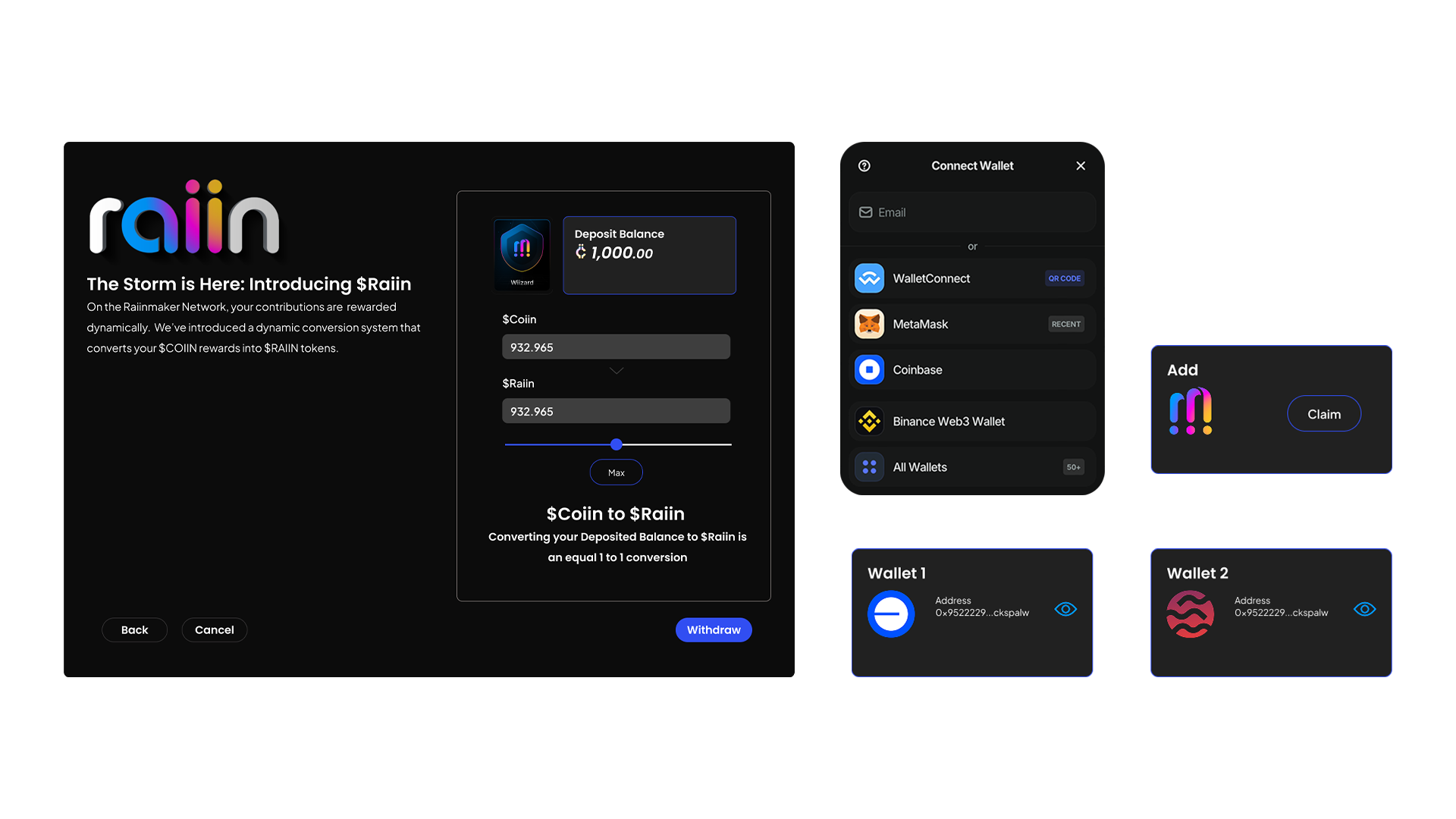
1. Staking & Token Actions a Deposit, Stake, and Burn flow with low-friction actions
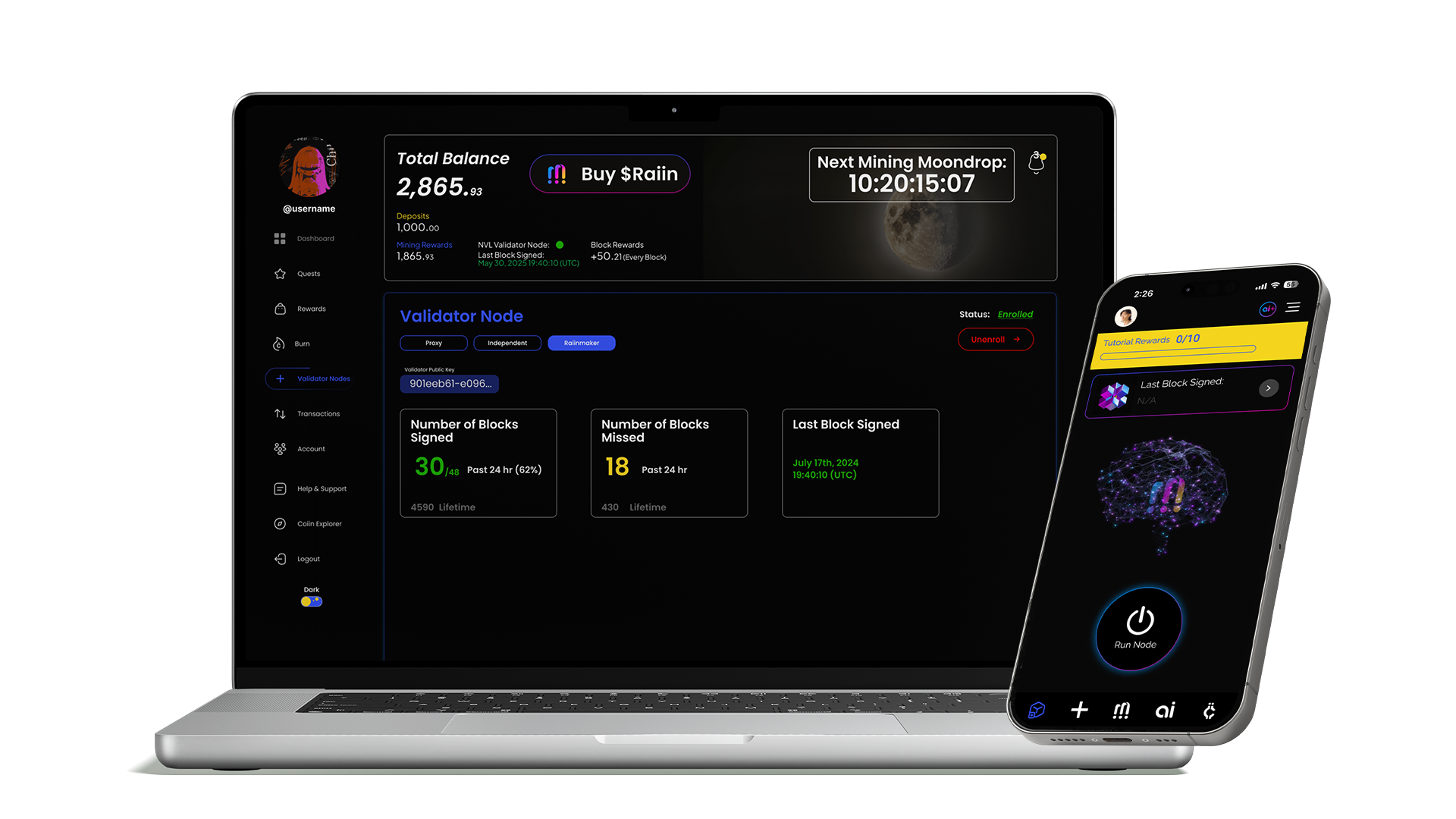
2. Validator System: multi-layered blockchain validator node system that rewarded users for their on-chain contributions
3. Reputation & Scoring UI: a tiered ranking system and leaderboard around the platform's AI Score, balancing gamification with clarity making sure users could see exactly what actions moved their score and why
4. Flow Simplification for a New Demographic: restructured and simplify language/interactions originally designed for a more technical audience, without breaking the experience for existing power users
Results
Coiin.ai started as a focused desktop interface for running validator nodes and as the product matured, the scope expanded significantly. New features like staking, burning, and quest systems were layered in under tight deadlines, and short notice. The eventual merge with the Raiinmaker app introduced a new wave of complexity: a different user base, less technical but still crypto-native, was now entering the platform through Coiin.ai for the first time. That shift meant going back through existing flows to re-word, simplify, and restructure them so the dashboard could serve both its original technical audience and this new, broader group without compromising usability for either. The result is a product that absorbed several rounds of fast-moving scope change while staying concise.